Sunday, January 5, 2014

January 2014 Newsletter - Cleansing Time?


Happy New Year – Year of the Book?

I hope everyone is off to a Happy and Healthy New Years!  I’m not sure what the official Chinese New Year is but I’m calling my 2014 the “Year of the Book.” What do I mean by that? Well, over the last few weeks I started to regain momentum for writing my book on nutrition.  It is definitely a major undertaking, but breaking it down into pieces seems to make it more manageable.  I began to edit some of what I have already written and started to write new sections.  If I can keep this up over the next few months I will be well on my way.  You will be able to monitor my progress as I’ll be posting the excerpts via my blog, on Facebook and Twitter, and via the monthly newsletters.  

We all know it is that time of year again – New Year’s resolutions.  We all make them, but I believe they are more important now than ever, particularly those related to our future health.  If you follow the news you know the last place you want to be is a modern hospital.  Go in to get your tonsils removed and wind up brain dead on life support.  Not where you want to be! (Sounds like a DirectTV commercial!)

One of the best ways to clean up your diet is the 21 Day Purification Program from Standard Process.  Many of you are already regulars and you know its benefits.  For those of you who have not tried it yet, I strongly recommend it.  And now, if you are not up for a full 21 days, there are two new 10-day programs for you.  These are also highly recommended.  See below for links to read about the different programs.

It is important to remember that it all starts with food!  You can try the other mainstream approach of increasing your exercise and eating less, but that has proven to be very ineffective and inefficient for most people as they suffer from what I call The January Effect.  What is that?  See below in the featured article.

One last thing to bring up.  If you want to save some money while you shop on the web you should check out Ebates.  See below for all the details.  It is really worth your while, but since it is not nutrition related I put it at the end of the newsletter.

From The Book – Newly Completed Hormone Section

The major book accomplishment of the last month was to re-write and finish the hormone section of the book.  Throughout January I will be posting those excerpts.  The series begins with the Introduction:

Meet Your Hormones – The Endocrine System – Part 1
Many experts agree that your body’s most important functional system is the endocrine system.  It is composed of glands (the endocrine glands) that produce hormones that control everything happening in the body. So, it’s time to meet your hormones.  Or, as one of my favorite clients called them: her “horror-mones!”  To read the rest of the article click here: http://brwellness.blogspot.com/2014/01/meet-your-hormones-endocrine-system.html


For future excerpts please follow my blog, Facebook, and/or Twitter feeds.

The January Effect

I bet you are wondering – what is the January Effect?  You’ve probably never heard that phrase before in a nutrition article.  It is a phrase I have coined for what seems to happen every January.  It starts with the New Year’s resolution to: get healthier; shed the extra pounds from the Holidays; them off; and to rediscover the glory of our youth.  The health and fitness clubs are packed with people all with the same idea.  Lines of people wait for you to finish with the equipment you are using.  But, within a few short weeks the crowds disappear and there are no more lines.  The January Effect has set in.
To read the rest of the article click here: http://brwellness.blogspot.com/2014/01/the-january-effect.html

Cleanse Program Links

Now is a great time for “the cleanse.”  Now there are three great programs to choose from:
2.       The 10 day Blood Sugar Control Program. http://www.purificationsupport.com/bloodsugar
3.       The 10 day Female Vitality Program. http://www.purificationsupport.com/femalevitality

Ebates Offer

I’m not usually big on promoting stuff like this, but if you shop on line a lot, this is a really good deal.  My sister had me sign up and at first I didn’t really use it much, but then with the Holidays I started to shop online and notice the e-bates build up.  It works real simple.  Different stores offer “ebates” on your purchases.  Usually 1-3%, but they’ll also double it, or have special offers of 50-60% off.  It seems that most stores are involved.  You use eBates as the entry to those web sites and if you have accounts with that store you go right into your account so nothing new needs to be entered.  If you don’t mind that they are getting your shopping habits why not?  

Here’s an example.  Let’s take Kohl’s.  Normally they give you a 3% rebate, but during the holidays they doubled it to 6%.  You can add that to the 20% or 30% you are already getting from Kohl’s.  If you are crafty you can get additional savings.  My Chase Visa was giving 5% for Kohl’s during the fourth quarter and I had an American Express offer for $10 if I spent $50.  You can see how the savings can add up!  I got some of the Entertainment Books for like $10.  They were $20 for the first book and $15 for additional books and they were giving 45% ebate!

After my first purchase I got a $10 Target gift card.  And later you get this offer if you sign up two people you get $50!

So, if you’re interested please sign up.  You’ll save some money for sure.  I’ve got $60 or so coming and I’m not really that big a shopper!


Bernard Rosen, PhD is a Nutrition Consultant and Educator. He works with individuals, groups, and at corporations to create individualized nutrition and wellness programs. His office is in Mequon, WI. To learn more or to schedule an appointment, e-mail at bernie@brwellness.com, call (262) 389-9907 or go to www.brwellness.com.
 

Meet Your Hormones - The Endocrine System - Part 2


In Part 1 of this article I introduced the endocrine system.  The overview continues here.  Following is a brief overview of the glands, the hormone(s) they produce, and the function of those hormones.   
Future articles will provide more details.

Pineal gland
Melatonin – sleep regulation, internal clock.

Hypothalamus
Produces several releasing hormones and inhibiting hormones.  The releasing hormones stimulate the anterior pituitary to release hormones.  The inhibiting hormones stop the anterior pituitary from secreting hormones. The major releasing hormones are:
Thyroid releasing hormone (TRH) – stimulates pituitary to release TSH.
Corticotropin releasing hormone (CRH) – stimulates pituitary to release ACTH.
Gonadotropin releasing hormone (GnRH) – stimulates pituitary to release FSH and LH.

Pituitary
The pituitary gland produces different hormones from its anterior and posterior parts.
The anterior pituitary secretes hormones to stimulate additional hormones.  It receives its instructions from the hypothalamus.
Thyroid stimulating hormone (TSH) – stimulates secretion of thyroid hormones.
Adrenocorticotropic hormone (ACTH) - stimulates secretion of adrenal cortex hormones.
Follicle-stimulating hormone (FSH) – In females stimulates development of ovarian follicles and secretion of estrogen; in males stimulates testes to grow and produce sperm.
Luteinizing hormone (LH) – In females stimulates maturation of ovarian follicle and ovum; stimulates secretion of estrogen; triggers ovulation; and stimulates development of corpus luteum.  In males stimulates interstitial cells of the testes to secrete testosterone.
Growth hormone (GH) - Stimulates growth in all organs; mobilizes food molecules, causing an increase in blood glucose concentration.
Prolactin (lactogenic hormone) - Stimulates breast development during pregnancy and milk secretion after pregnancy.
The posterior pituitary secretes ADH and oxytocin.
Antidiuretic hormone (ADH) - Stimulates retention of water by the kidneys.
Oxytocin - Stimulates uterine contractions at the end of pregnancy; stimulates the release of milk into the breast ducts; and plays a role in sexual arousal in males and non-nursing females (sometimes called the “cuddling hormone”).

Thyroid
Thyroxine (T4) and Triiodothyronine (T3) – Stimulate the energy metabolism of all cells.
Calcitonin – Inhibits the breakdown of bone; causes a decrease in blood calcium concentration.

Parathyroid
Parathyroid hormone (PTH) – Stimulates the breakdown of bone; causes an increase in blood calcium concentration.

Thymus
Thymosin – Promotes development of immune system cells.

Pancreas
Glucagon – Stimulates liver glycogenolysis, causing an increase in blood glucose concentration.
Insulin – Promotes glucose entry into all cells, causing a decrease in blood glucose concentration.

Adrenal
Mineralocorticoids: aldosterone – Regulates electrolyte and fluid homeostasis.
Glucocorticoids: cortisol (hydrocortisone) - Stimulates gluconeogenesis, causing an increase in blood glucose concentration; also have anti-inflammatory and anti-immunity, anti-allergy effects.
Sex hormones - the adrenals produce “female” hormones in males (estrogen, progesterone) and “male” hormones in females (testosterone).
Epinephrine (adrenaline) and norepinephrine - Prolong and intensify the sympathetic nervous response during stress.

Ovary (Female)
Estrogen – Promotes development and maintenance of female sexual characteristics.
Progesterone – Promotes conditions required for pregnancy.

Testes (Male)
Testosterone – Promotes development and maintenance of male sexual characteristics.

Fat Storing Cells
Leptin – Controls how hungry or full we feel.

Bernard Rosen, PhD is a Nutrition Consultant and Educator. He works with individuals, groups, and at corporations to create individualized nutrition and wellness programs. His office is in Mequon, WI. To learn more or to schedule an appointment, e-mail at bernie@brwellness.com, call (262) 389-9907 or go to www.brwellness.com.

Friday, January 3, 2014

Meet Your Hormones - The Endocrine System - Part 1


Many experts agree that your body’s most important functional system is the endocrine system.  It is composed of glands (the endocrine glands) that produce hormones that control everything happening in the body. So, it’s time to meet your hormones.  Or, as one of my favorite clients called them: her “horror-mones!”

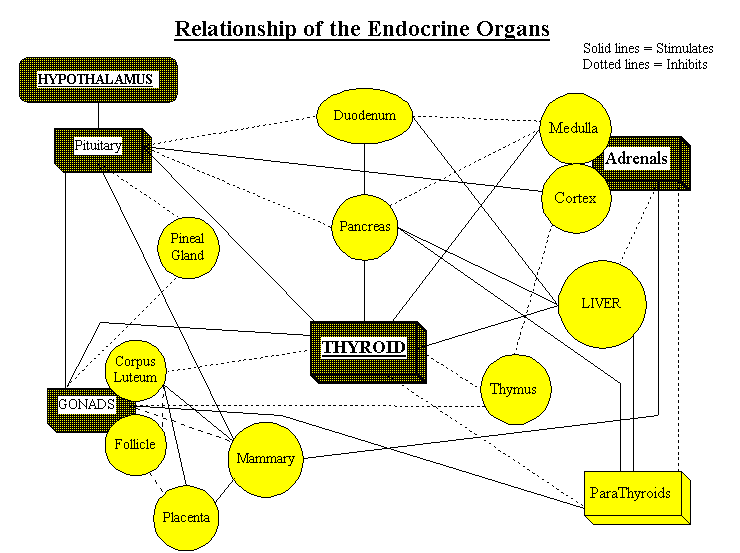
Hormones are very powerful biological chemicals produced in very small amounts by the endocrine glands.  Hormone levels are precisely and carefully monitored and controlled by the body. They are released into the blood stream and carried to specific cells to initiate specific activities; regulating, controlling, and coordinating all body functions.  Many hormones are made at additional tissue sites as well as their “parent” gland.  You can think of this as your body’s own inherent back-up system.  

Hormones from the different endocrine glands interact with each other in complex ways.  One of the best illustrations of this I have seen is from endocrinologist Dr. Henry Harrower.  You can see this below or follow this link:  http://naturalhealthtechniques.com/wp-content/uploads/2011/03/Harrowers_chart_Endocrine_Imbalance.gif


Proper nutrition is critical for the endocrine glands.  Each gland relies on a specific trace mineral to support its normal physiology and biochemistry.  We consume these trace minerals when we eat real foods from both plant and animal sources. Without sufficient amounts of these minerals the glands will not function properly ultimately leading to a variety of symptoms in the body.  We will discuss these symptoms in more detail later when we explore each gland.

The endocrine gland and its associated trace mineral are as follows: pituitary (manganese); thyroid (iodine); adrenal (copper); pancreas (chromium); prostate/uterus (zinc); and testes/ovaries (selenium).  The other major endocrine glands are the hypothalamus, pineal, parathyroid, thymus, and believe it or not – your fat cells.

Here are a few more basics about hormones to provide you with additional background.  Each human cell has receptor sites.  You can think of these as ‘gates” located on the cell membrane that control the entry of hormones and other bio-chemicals into the cells.  These receptors determine if and how effectively a hormone message is received.  

There are a variety of scenarios in which these sites are not functioning optimally.  They can become “resistant” to the hormone meaning more of the hormone is required to deliver the message.  You may have heard of “insulin resistance” a condition that often precedes diabetes.  In other cases an excess of one hormone may block the gate of another, or another substance may mimic a hormone and block a receptor site (this is called a xenohormone). 

Hormones exist two ways in the blood stream.  Protein-bound hormones are considered inactive (as they are bound to a protein).  “Free” hormones are the active form that is able to bind to cell receptors and initiate the cellular response.  

Hormones have a lag time from secretion to activation that ranges from seconds to hours.  They are either amino acid based or steroid based (gonadal, adrenal). The liver and the kidney flush excess hormones out of the body.  

The main control of the endocrine system rests in the hypothalamus-pituitary axis (or H-P axis).  The hypothalamus is part of the limbic system so it is in the brain and receives information which it relays to the pituitary.  The pituitary is also known as “the master gland” because it sends information to other endocrine glands based on what it has learned from the hypothalamus. 

In Part 2 of this article we will take a brief look at each gland, the hormone(s) it produces, and the basic function of those hormones.

Bernard Rosen, PhD is a Nutrition Consultant and Educator. He works with individuals, groups, and at corporations to create individualized nutrition and wellness programs. His office is in Mequon, WI. To learn more or to schedule an appointment, e-mail at bernie@brwellness.com, call (262) 389-9907 or go to www.brwellness.com.

Thursday, January 2, 2014

The January Effect


I bet you are wondering – what is the January Effect?  You’ve probably never heard that phrase before in a nutrition article.  It is a phrase I have coined for what seems to happen every January.  It starts with the New Year’s resolution to: get healthier; shed the extra pounds from the Holidays; them off; and to rediscover the glory of our youth.  The health and fitness clubs are packed with people all with the same idea.  Lines of people wait for you to finish with the equipment you are using.  But, within a few short weeks the crowds disappear and there are no more lines.  The January Effect has set in.

So, what’s going on?  You’re eating less, snacking less, even drinking a bit less (except of course for during the Packer games and other special occasions).  You are forcing down the salads at lunch (even though you don’t really like them), skipping a meal here or there, and working out hard at the gym.  You dropped a few pounds at first but now you’ve hit the wall – you’re at a plateau.  The pounds are no longer flying off.  This is the January Effect.  However, don’t be discouraged.  If you read on you’ll learn how you can get lasting results and overcome it.

We are told the formula is simple: calories out must be greater than calories in - less food and more exercise equals less weight.  Well, if you’ve been reading my past articles you understand the flaws in this theory.  To keep it short and simple all calories are not created equal.  If you want to review this concept you can find the information on my blog (http://brwellness.blogspot.com/2012/02/calories-not-created-equal-and-perhaps.html).

Back to the January Effect.  Let’s also look at what is happening in the body when you increase your exercise.  First, as you exercise your body needs energy for that activity.  Second, because of the exercise you are creating a demand for new muscle.  Third, exercise is stressful, especially if it is new to your body. 

Let’s look at each of those points.  Energy comes from food.  This means you need to eat to have sufficient energy for the workout.  The types of food we eat are critical.  We get energy primarily from carbohydrates and fat.  Eating the wrong carbohydrates (particularly the ones for quick energy) will raise your blood sugar levels quickly.  This will in turn raise your insulin levels.  Consistently elevated insulin will put you in a fat storing mode.  We will see the implications of this shortly. 

To build muscle you need to eat protein.  Carbohydrates and fats do not build muscle.  Also, muscle burns fat, so the more muscle we build, the more fat we can burn.  However, if you are not eating enough protein you will not build muscle.

Exercise is stressful.  While it is enjoyable and good for you, it is still creates a stress response in the body.  Over-exercising can be particularly stressful.  What happens when we are stressed?  We produce cortisol.  Cortisol puts sugar into the blood stream which causes insulin to rise.  So, when our cortisol stays elevated we again find ourselves in the fat storage mode.  

When you are exercising your body looks for energy in several places.  First it uses the glucose (sugar) in the blood.  Second it uses glucose stored in the liver and muscles.  Third it accesses your fat to turn it into glucose.  However, here’s the problem.  As we discussed, if your insulin and/or cortisol levels are elevated your body is in fat storing mode.  You are unable to access your fat for burning during the exercise. 

As you continue to press on with your exercise your body must find an alternative energy source.  While this isn’t the preferred source it can break down protein into glucose for blood sugar.  (The extreme example of this being starvation.)  Where does this protein come from?  It is from the protein stores in your body – your muscles.  So, do you see what is happening?  Unable to access fat your body uses itself to fuel the continued activity.  Muscle weighs more than fat so the weight loss you are seeing is from the muscle and perhaps not the fat.

Most programs just measure pounds but there is much more to the story.  Your goal is to lose fat, not weight.  You need to look at your body composition; the amount of muscle and fat.  Only in this way can you determine if you are making progress in your goal of losing fat. 

What is the conclusion of all this?  Weight loss is complicated and should not be looked at as a quick fix.  The healthy way is to do it over time.  The best way to lose weight is to complement healthy eating with your exercise program so that you are properly fueling your body to both lose weight and sustain the exercise.

Bernard Rosen, PhD is a Nutrition Consultant and Educator.  He works with individuals, groups, and at corporations to create individualized nutrition and wellness programs.  His office is in Mequon, WI.  To learn more or to schedule an appointment, call (262) 389-9907 or go to www.brwellness.com.